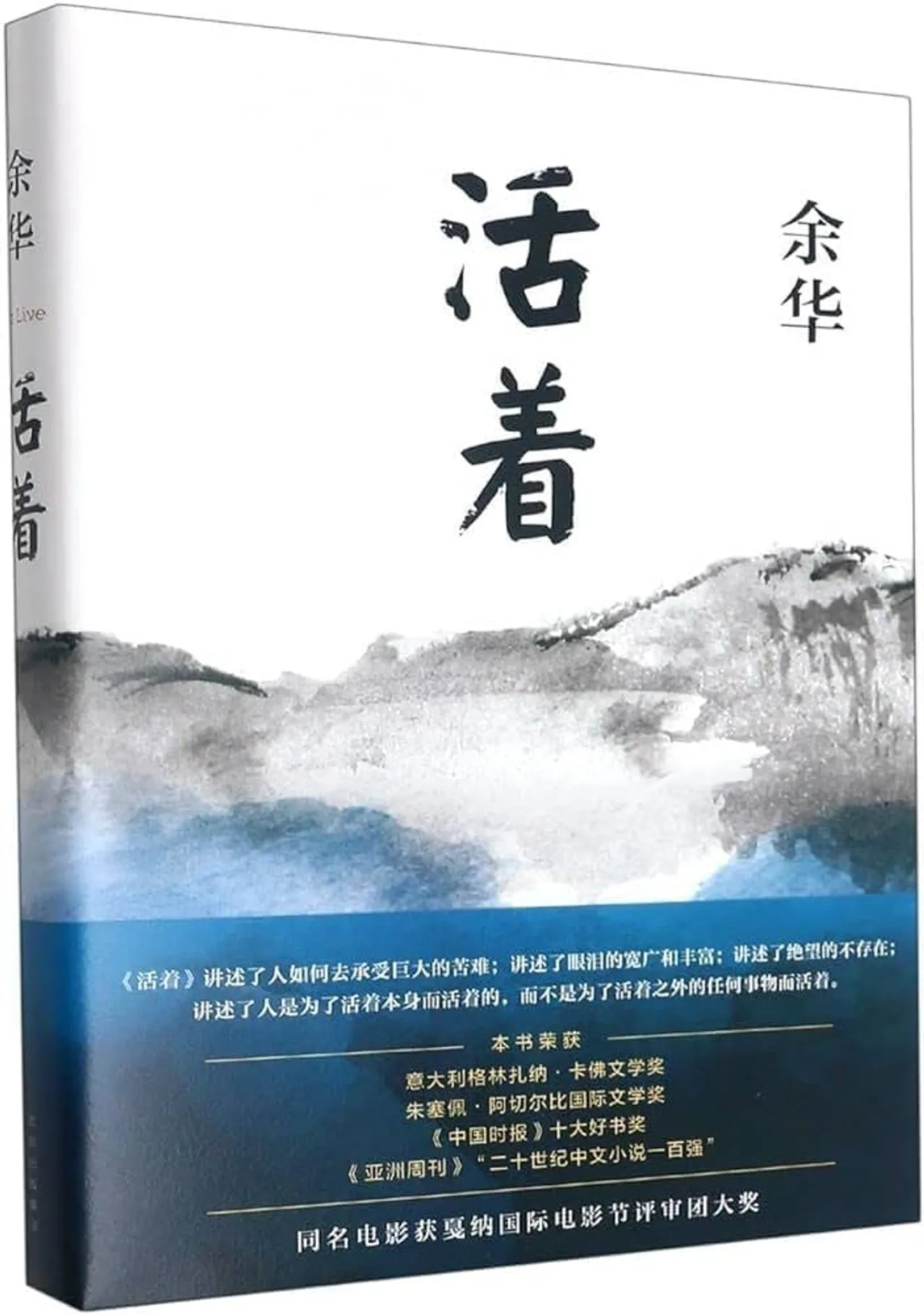
《活着》 - 余华
从纨绔子弟到白发老农,福贵用一生的悲欢离合,讲了一个关于失去、承受与怀念的故事。这是我读完《活着》后的一些感想:关于苦难如何塑造一个人,也关于人为什么还要活下去。
Long before I encountered Yu Hua’s writing, I came across these two lines: “Fugui, there are six people in your family.” “Fugui, there are five graves in your family.” Before I had read the book, I more or less imagined that Fugui’s life must be unbearably bitter, even though his name carries such an auspicious meaning. Recently, I finally had the opportunity to read it, and these are my reflections:
To Live follows the life of its protagonist, Fugui. Through the dramatic turns of his fate, the novel portrays the transformations of twentieth-century Chinese society and offers a parable of ordinary people struggling to survive beneath the crushing weight of their times. Fugui’s life is tragic, at least for most of it. Suffering and misfortune are magnified without limit in him, forcing me to confront a question clearly: when a person has endured so many calamities capable of stripping away his dignity, how does he continue living, and how can he find meaning in life amid all that suffering?
For a long time after finishing the book, I saw Fugui as an unfeeling sufferer, little more than a walking corpse. One heartbreak follows another, crushing him until he no longer knows how to face the days ahead, and so he arrives at this conclusion: a person lives for nothing else; a person lives simply to live. But on closer thought, when the elderly Fugui recounts the events of his life, his voice contains more than regret and unwillingness to accept what happened. More than anything, it contains remembrance. I thought about this for a long time: how can a person do that? After losing his parents, his wife, both of his children, and his grandson, how can he still look back with longing? Slowly, I came to understand. Whether positive or negative, a person’s experiences remain their experiences. The brief joys that came before disaster are also worthy of celebration, recollection, and remembrance.
Fugui goes from compulsive gambling and reckless self-indulgence, to family ruin and submitting to whatever comes, and finally to calmly embracing the emptiness of existence. What he learns is never how to regard life and death, but how to understand the meaning of living through one loss after another.
Below are some scenes that remain vivid in my memory, recorded here so that I will not forget them in the years ahead:
After Long Er schemes to win Fugui’s family property from him at the gambling table, Fugui’s father does not let him repay the debt with lightweight silver dollars or banknotes. Instead, he converts the entire family fortune into heavy copper coins and makes Fugui carry them over, load by load. For the first time, the young Fugui feels the physical weight of money instead of seeing it as two weightless lines in a ledger. He also comes to understand just how hard-won that slow accumulation was: from a chicken to a goose, from a goose to a sheep, and from a sheep to an ox.
Fugui’s name is Fugui. Fugui, Fugui: good fortune is, of course, precious. Fortune is hard to come by, and keeping it close is harder still. The backlash that follows once fortune has scattered is something I would never be willing to bear.
Fengxia is left deaf and unable to speak after a high fever, then later dies from postpartum hemorrhaging; Youqing, small and thin, later dies after too much of his blood is drawn; Kugen, whose name means “Bitter Root,” is given that name because he loses his mother at birth, helps his father and grandfather with their work from childhood, and ultimately dies after eating too many beans. Fate leaves behind too many riddles, and it always seems to have countless seemingly absurd ways of shattering your hopes. The only thing we can do is accept what comes.
I offer this essay in remembrance of Fugui’s life, from a pampered young heir to a man tempered into one who could bear suffering. Thank you to To Live, and thank you for reading.
很早之前,在接触余华的文字之前,我就看见了这样一句话:“福贵,你家六口人啊”“福贵,你家五口坟啊”。 在没有读到这本书之前,我心里大抵是这样想的:福贵的一生肯定苦不堪言,明明有个寓意这么好的名字。 最近,我终于得到机会去读了这本书,下面是我的读后感想:
《活着》以主人公福贵的一生为主线,通过他跌宕起伏的命运轨迹,展现了二十世纪中国社会的变迁,以及时代碾压之下普通人的生存寓言。 福贵的一生是悲惨的,至少他生命中的大部分时光是这样。 苦难与不幸在福贵身上被无限放大,让我清楚地认识到:当一个人经历了这么多足以抹去尊严的不幸,他该如何活下去,又该如何在这些苦难里找到活着的意义。
读完这本书后的很长一段时间,我都把福贵看作一个麻木不仁、行尸走肉般的受难者。 伤心事一件接着一件,压得他不知该如何面对往后的日子,于是他得出了那个结论:人活着不为别的,人活着就是为了活着。 可是仔细一想,当老福贵讲述自己一生的事迹时,他的语气里除了惋惜与不甘,更多的其实是一种怀念。 我思考了许久:人怎能做到如此? 失去了父母、爱人、一对儿女和外孙,竟还能怀念? 慢慢地我想明白了。 人的经历不管是正面的还是负面的,它终归都是经历。 灾难来临前那些短暂的欢愉,也值得歌颂,也值得去回忆、去怀念。
福贵从嗜赌成性、放浪形骸,到家道中落、逆来顺受,再到最后坦然接纳生命的虚无,他学到的从来不是如何看待生死,而是在一次次失去中理解活着的意义。
下面是一些让我记忆犹新的情节,以免我日后遗忘:
当福贵的家产被龙二用赌局设计骗走后,他父亲没有让福贵拿轻便的银元或纸钞去还债,而是把家当全换成了笨重的铜钱,让他一担一担挑着去还。 这让年轻的福贵第一次掂出了金钱的重量,而不再是账本上轻飘飘的两行字。 福贵也由此体会到,从鸡到鹅、从鹅到羊、再从羊到牛的那份积攒,究竟有多么来之不易。
福贵的名字是福贵。 福贵,福贵,福当然贵。 福来之不易,让福留在身边更是难上加难。 而福散之后的反噬,是我无论如何也不愿承担的。
凤霞在一场高烧后成了聋哑人,后来死于产后大出血;有庆身形瘦小,后来死于抽血过量;苦根因一出生就没了娘而得名苦根,从小帮着爹和外公干活,最后却因吃豆子撑死了。 命运留下了太多谜语,也总有无数种看似荒唐的方式来打碎你的希望。 我们能做的,唯有接纳。
谨以此文铭记福贵从纨绔子弟一路被锤炼成苦难承受者的一生。 感谢《活着》,感谢阅读。